
The fire is out. Now you need to know what can be saved
Fire and smoke damage restoration goes beyond what burned. Smoke and soot travel through the whole house, and the water that put the fire out soaks floors and walls. We inspect the full loss, clean up smoke and soot, dry the water, treat the odor at its source, and rebuild.
Available 24/7 in Cumming, Sugar Hill, Suwanee, Alpharetta, Canton, Flowery Branch, and surrounding North Georgia communities, with IICRC-certified technicians.
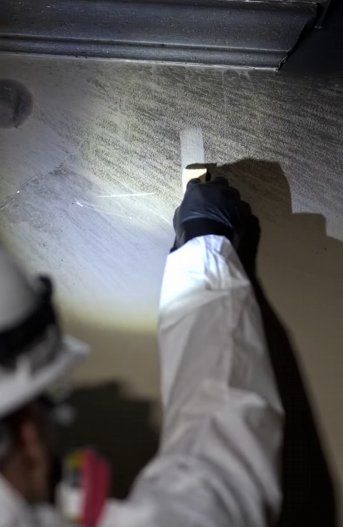
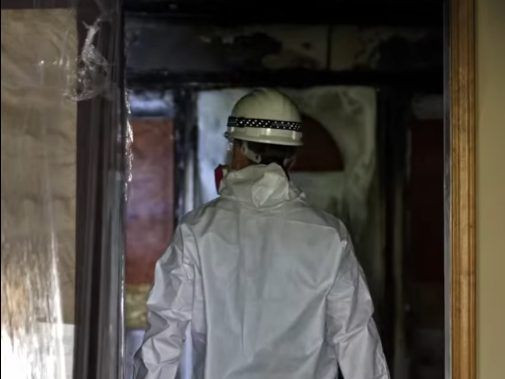
A technician at the doorway of a room with soot-blackened walls, in a house in Cumming, GA. Smoke and soot cleanup
Soot settles on walls, ceilings, cabinets, and furniture in rooms the fire never reached. We identify what can be cleaned and restored, clean it with the right method for the surface, and remove what cannot be saved.
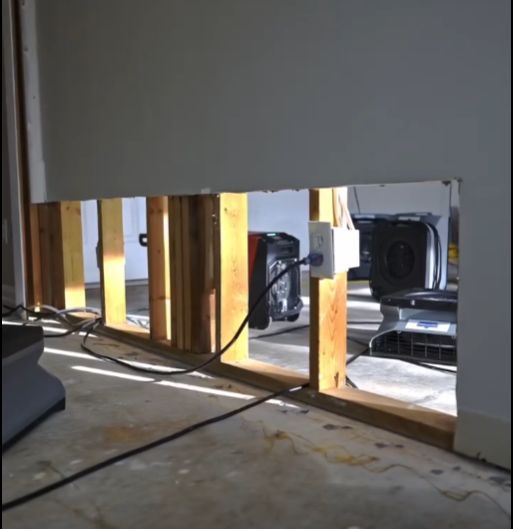
Drying equipment set up behind an opened wall in a garage side room, Roswell, GA. Water from the fire hose
The water that saved the house is now inside the drywall, insulation, and subfloor. We extract it, set drying equipment, and track moisture readings until the structure is dry, following IICRC S500.
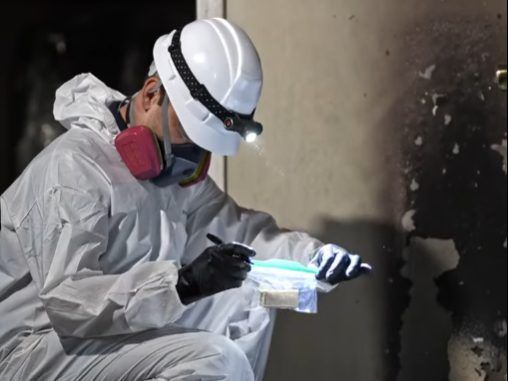
A technician crouched beside a soot-streaked wall in a house in Cumming, GA, writing on a clear bag. Insurance claim, documented
We photograph every affected room, log moisture readings, and write the estimate your adjuster needs. It helps when the smoke and water damage are on record from day one, not just the room that burned.
I’m an architect and very particular, so I don’t make statements like this of contractors very often.
We had a house fire with major water damage, and everything went down to the bare studs. This group was very diligent cleaning up and providing the required mitigation. Then afterward the quality of the rebuild was outstanding.
After the fire: your first hour.
Do only what is safe. We can talk you through each step on the phone.
- 1Stay out until the property is cleared.
Homeowners are usually not allowed back in right away. Once the fire marshal clears the property, we go in first with protective equipment. If you need to go inside, we bring you in with protective equipment we provide.
- 2Do not wipe, wash, or run the HVAC.
Wiping soot grinds it into the surface. Water on soot sets the stain. Running the air conditioner or furnace pulls smoke through the ductwork into every room. Leave all of it until we have inspected.
- 3Let us photograph inside.
Do not go back in to take pictures. Once the property is cleared, we photograph every room, including rooms that did not burn, before anything moves. Your adjuster will want to see where the smoke and water went.
Call Royalty Restoration now.
We will tell you what to do next and send a crew to inspect, document, and start the work.
Fire damage is rarely just fire damage.
A house fire can cause several kinds of damage at once. Here's how we handle each one.
How fire damage restoration works
Know what happens next from the first call until your home is restored.
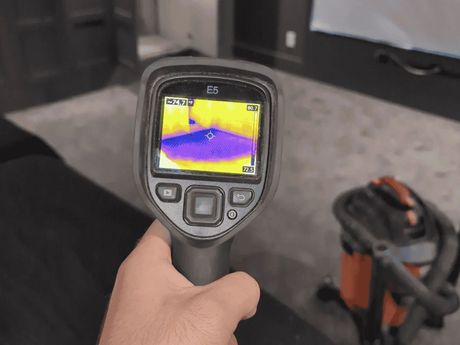
Step 1: Free inspection and damage assessment
Once the property is cleared for entry, we inspect and document the damage. After you hire us, we can secure the property, including board-up.
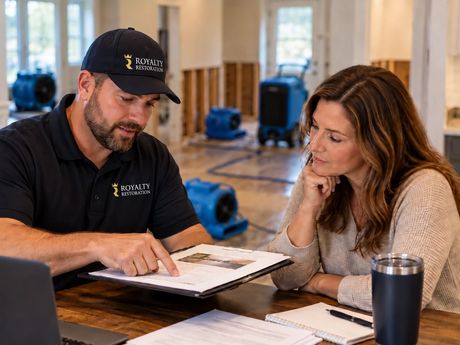
Going over the insurance paperwork with a customer. Step 2: Insurance-ready consultation
Insurance claims can get complicated fast, and good documentation matters. We document the loss, explain what to expect, help you understand what your insurer may need, and stay involved as the claim moves forward so you are not navigating the process alone.
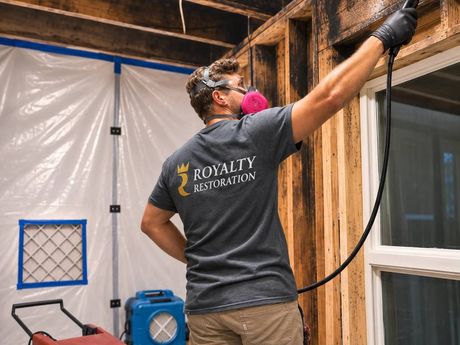
Royalty Restoration cleaning blackened framing inside a sealed work area in Cumming, GA. Step 3: Clean, remove & stabilize
After the property is cleared, an independent industrial hygienist evaluates the affected areas and sets the cleaning protocol before removal begins. We extract water left from firefighting and dry affected areas, and remove debris and materials that cannot be saved once the protocol is set. We clean soot and smoke residue, isolate affected areas to keep contamination from spreading, and treat lingering odors. Salvageable belongings can be packed out for professional cleaning and storage while we prepare your home for repairs and reconstruction.
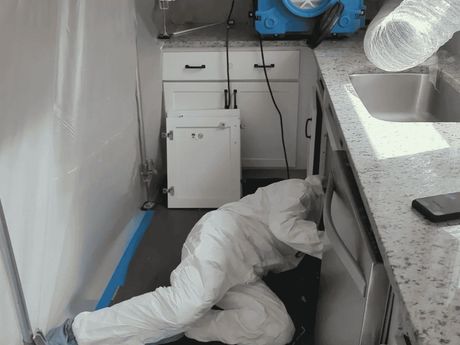
Step 4: We put your home back together
We don’t stop at cleanup. We rebuild, repaint, and restore your home so it is safe, sanitary, and finished to a high standard.
Call us before you describe the fire to your insurer.
Your first description to your insurance company can set the scope of the claim. After a fire, most of the loss is in rooms you have not looked at closely yet. We inspect and document first so you can report the full loss once, accurately.
What the insurer needs to know
A fire loss can involve three types of damage: fire, smoke and soot, and water from the fire department. If you report “the kitchen burned,” that can become the claim you start with. We photograph every affected room and log the moisture readings so the whole loss is on record from day one.
Renting, or own a rental?
A fire in a rental can involve the building owner’s policy and the tenant’s renter’s insurance, and they can cover different parts of the loss. Tell us when you call. If you rent, we contact the property owner before we start. We document the structure and the contents separately so each policy has what it needs.
We work with all insurance companies. If you already called yours, that is fine. Call us next and we will document what they will need.
No insurance, or a loss too small to claim? We take self-pay and will work with you on the scope.
Get in touch
Give us a call for a free inspection and consultation. We are available 24/7.
Call now and we’re on our way. Areas we serve
Fire and smoke damage questions
What should I do after the fire department leaves?
Stay out. Homeowners are usually not allowed back in right away. Do not wipe soot or run the HVAC. Then call us. Once the fire marshal clears the property, we go in first with protective equipment and photograph and document every room, not just the room that burned. If you need to go inside, we bring you in with protective equipment we provide.
Can my furniture and clothing be saved?
Often, more than you expect. We sort contents room by room, document what can be cleaned and restored, and record what is a loss so your carrier can review it. Do not throw anything away before it is documented.
Why do I need a restoration company if the fire only damaged one room?
Because the smoke and the water did not stay in that room. Soot settles throughout the house and fire hose water runs into walls and floors you cannot see. A one-room fire is usually a whole-house cleanup, and the parts you cannot see are what cause problems later.
Can smoke odor really be removed?
Yes, when the residue that causes it is removed. Odor lives in soot on surfaces and in porous materials like drywall, insulation, and fabric. We use cleaning methods that pull the residue out, treat or remove the materials that hold it, and deodorize at the source. Sprays and fragrance only mask the odor.
Should I start cleaning before you arrive?
No. Wiping soot pushes it into the surface and water on soot sets the stain, which turns a cleanable wall into a repaint. Leave it until the surfaces are tested.
What happens to the water the fire department used?
We treat it like any other water loss. We extract standing water, set drying equipment, and track moisture readings until drywall, subfloor, and insulation are dry. Left alone, mold can start to grow inside the walls within 24-72 hours (IICRC S520).
Does homeowners insurance cover fire and smoke damage?
Coverage depends on your policy. Smoke and the water used to put the fire out are often part of the same claim. Call us before you describe the damage to your carrier so the whole loss is reported, not just the burned room.
Do you handle the cleanup and the rebuild?
Yes. In Cumming and across Forsyth County, we handle fire restoration from inspection through cleanup, drying, odor treatment, and reconstruction, so you are not coordinating three contractors.