
Storm damage? We stop the water first
Wind, rain, and flooding leave water where it should not be. We board up and tarp the openings the same day, pull the water out, and dry the structure before mold gets a start.
Available 24/7 in Cumming, Roswell, Milton, Canton, Buford, Dawsonville, and surrounding North Georgia communities, with IICRC-certified technicians.
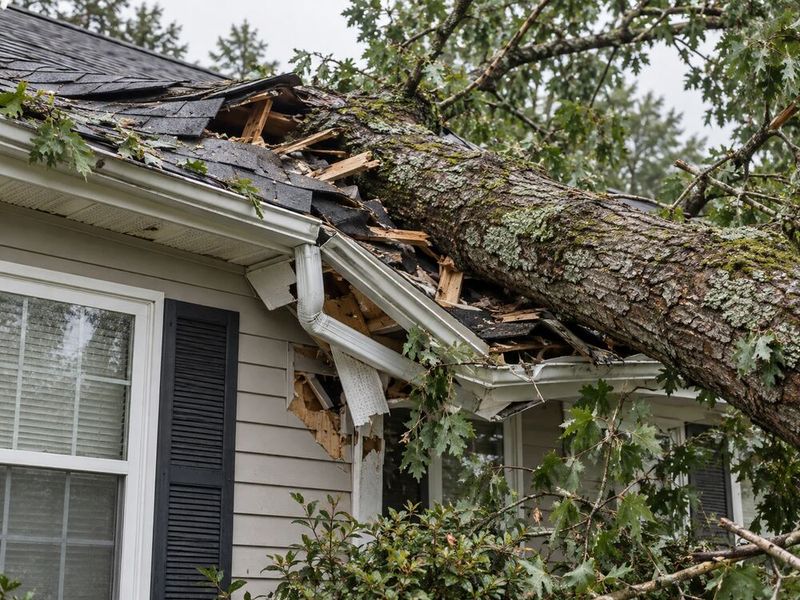
After the storm: your first hour.
Do these in the first 60 minutes, and only what is safe. We can talk you through each one on the phone.
- 1Stay clear of downed lines and sagging ceilings.
Treat every downed wire as live. If a ceiling is bulging with water, stay out of that room. Do not go into a room with standing water until the power to it is off. Call 911 if anyone is in danger.
- 2Slow the water, but stay off the roof.
Only after the power to that room is off, put a bucket under an active drip and move furniture and electronics away from the wet area. Leave roof tarping to us. Wet shingles and wind are how people get hurt after a storm.
- 3Photograph before you move anything.
Take wide shots of each room and close-ups of the damage, inside and out, from a dry spot. Your adjuster will want to see the storm’s path before cleanup starts.
Call Royalty Restoration now.
We will tell you what to do next and send a crew to board up and start drying.
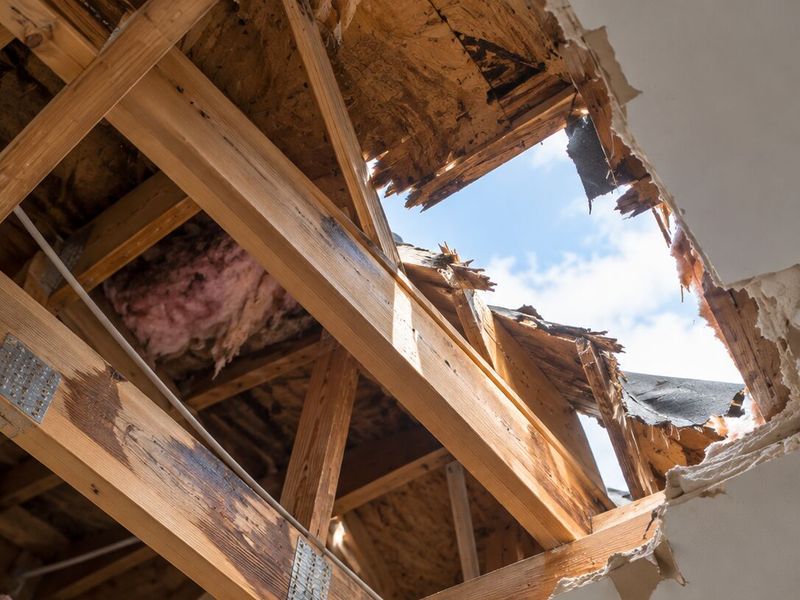
Roof and ceiling opened to the sky on a house in Cumming, GA. Protect and prepare
A damaged roof, blown-in window, or opening around the foundation can keep letting water in. We board up or tarp the damaged area first to help stop additional water intrusion and protect the property while drying, cleanup, and repairs begin.
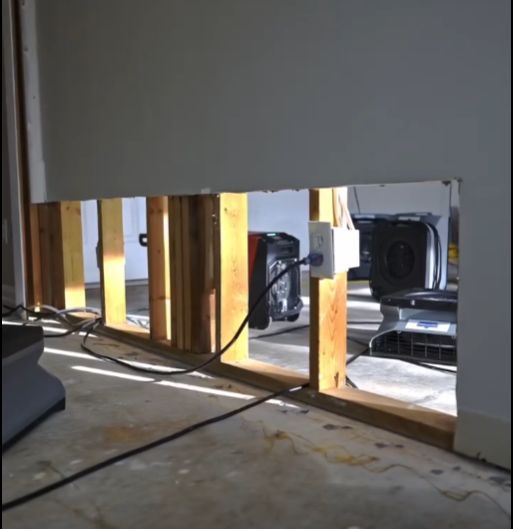
Drying equipment set up behind an opened wall in a garage side room, Roswell, GA. Extraction and structural drying
Storm water soaks into drywall, subfloor, and insulation fast. We extract standing water, set drying equipment, and track moisture readings until the structure is dry, following IICRC S500.
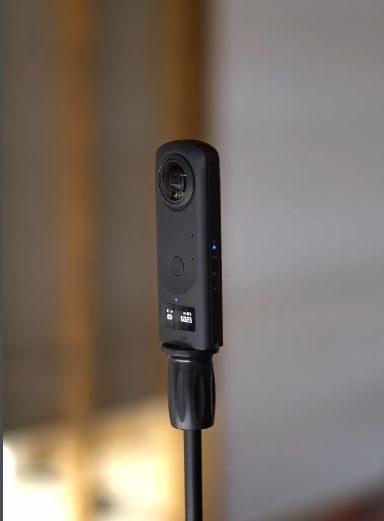
A compact HD 360 camera on a stand in Cumming, GA, creating 360-degree documentation for insurance claims. Insurance claim, documented
We photograph the entry point, log moisture readings, and write the estimate your adjuster needs. Wind and rain claims go smoother when the source is on record from day one.
What storm water damage looks like
Most storm calls in North Georgia fall into one of these. Find yours and see what we do about it.
How it works
Know what happens next from the first call until your home is restored.
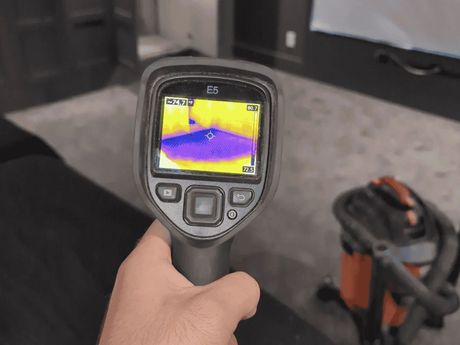
Step 1: An immediate free inspection
We respond fast, day or night. Our certified team arrives with advanced tools to locate leaks, assess damage, and take steps to stop further damage.
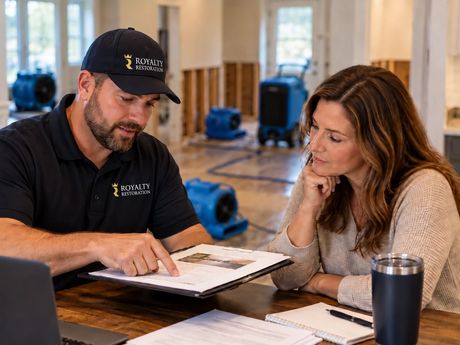
Going over the insurance paperwork with a customer. Step 2: Insurance-ready consultation
Insurance claims can get complicated fast, and good documentation matters. We document the loss, explain what to expect, help you understand what your insurer may need, and stay involved as the claim moves forward so you are not navigating the process alone.
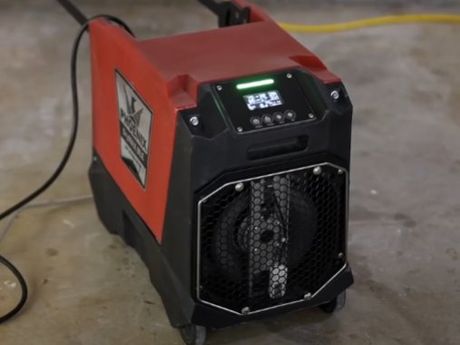
A Royalty Restoration dehumidifier running on a concrete floor at a home in Roswell, GA. Step 3: Dry, clean & protect
From water removal to reducing the risk of mold, we clean, dry, and sanitize affected areas. We also remove what cannot be saved and isolate problem zones to help protect the rest of your home.
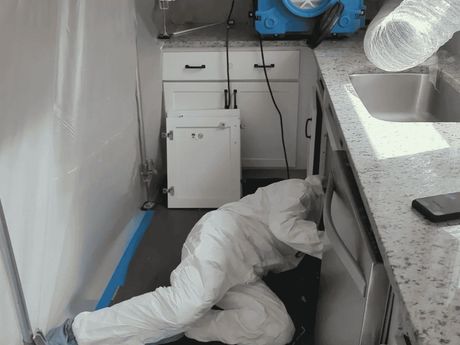
Step 4: We put your home back together
We don’t stop at cleanup. We rebuild, repaint, and restore your home so it is safe, sanitary, and finished to a high standard.
Wind damage or flood damage?
Storm losses get sorted by how the water got in. Your policy decides what is covered, but the two usual categories look like this. We document where the water came in, so your adjuster has the facts.
Water that came in from above
Rain entering through storm damage to a roof, wall, or window may be covered under the wind or storm provisions of a homeowners policy. Coverage depends on the policy and how the damage occurred.
We photograph the opening before we tarp it. That picture is the claim.
Water that rose from below
Surface water, overflowing creeks, or ground water into a basement. Coverage for water from outside the house varies. Check with your agent.
Not sure about coverage? Call us anyway. We take self-pay and will work with you on the scope.
We work with all insurance companies. Call us before you describe the damage to your carrier, so you can give them a complete picture of the loss. If you already called them, that is fine. Call us next.
We got flood, and contacted them on Saturday after noon and they responded instantly…
…came and did everything fast and professionally!
Get in touch
Give us a call for a free inspection and consultation. We are available 24/7.
Call now and we’re on our way. Areas we serve
Storm damage questions
Is storm damage covered by insurance?
Often, yes, when wind or a falling tree opens the home and rain gets in. Rising water, like a flooded creek or basement, is a separate question. Coverage for water from outside the house varies. Check with your agent. Your policy decides. We document the entry point and the moisture readings so the claim is clear from the start, and we send the adjuster our documentation.
Can I wait for the adjuster before you start drying?
No. Homeowners policies commonly require reasonable steps to protect the property from additional damage after a loss, and mold can start to grow within 24-72 hours (IICRC S520). We photograph everything before we touch it, so the adjuster sees the loss as it was. Starting right away protects both the house and the claim.
Do you repair the roof, or just tarp it?
We tarp and board up the same day to stop the water, and we rebuild the inside: drywall, insulation, flooring, paint. For a full roof replacement we coordinate with your roofer so the drying and the rebuild line up.
How fast can you get here after a big storm?
Available 24/7. Call now and we’re on our way. After a widespread storm, we prioritize homes where water is still coming in, so tell us right away if that is happening at your property.
Where do you provide storm damage restoration?
Royalty Restoration provides storm damage restoration in Cumming and throughout Forsyth County, with service across Alpharetta, Johns Creek, Suwanee, Buford, Canton, Gainesville, and other North Georgia communities in our local and extended response areas. See our Service Area page for complete coverage.
The power is out. Can you still work?
Call anyway. Tell us the power is out and we will plan the equipment and the schedule around it. Board-up and extraction do not have to wait for the lights.
Will there be mold after storm water damage?
Drying the structure quickly and correctly greatly reduces the risk of mold growth. If water has been sitting or hidden moisture remains, we inspect those areas and address any mold conditions we find. See our mold removal page for how that works.
Can a flooded home be saved?
Usually, yes. Framing, subfloor, and most hard surfaces can be cleaned and dried in place. Floodwater from outside is treated as contaminated, so anything porous it touched, like drywall, insulation, carpet, and pad, usually comes out above the water line. How much depends on how high the water rose and how long it sat. We test before we tear out, and we rebuild what we remove.
Is it safe to go back in after a flood?
Not until power to the wet areas is off and you know the floors and ceilings are solid. Stay out of standing water if the power is on. Do not touch floodwater or sewage without gloves and boots, because it carries bacteria. Watch for sagging ceilings and soft floors. If you smell gas, leave and call your gas company. If you are not sure, wait outside and call us.